
Due to default in payment, the securities of FICL and NDIL will be valued at zero basis AMFI standard hair cut matrix, and interest accrued and due will be fully provided.

'Calendar year 2023 is going to be big as pessimism takes a back seat.'

The proposed Central Bank Digital Currency (CBDC) to be issued by the Reserve Bank will play a critical role in improving the speed of transactions and reducing the cost of cash, a Deloitte report said on Wednesday. The Reserve Bank of India is planning to come out with a central bank-backed digital currency, using blockchain technology in 2022-23. As a financial services innovation, CBDCs are likely to play a pivotal role in shaping the 'future of value transfer', the report said, adding that most central banks worldwide are now in various stages of their evaluation of launching their national digital currencies.

'Revision of the base year for both CPI and GDP are long overdue.' 'The basic data that went into the 2011-2012 series were mainly from surveys done in 2011 or earlier.' 'We have since seen the emergence of new sectors like platform-based work and online marketing.' 'The employment surveys and the consumption surveys need to reflect these adequately.'

The reason for Trent's success is rooted in its slow and steady approach to expansion. Unlike others, Trent, led by Noel Tata, ensured that each store was profitable before it went on to the next, says Raghavendra Kamath.

A young couple sharing a laugh - in the living room over a Polish joke book, on the beach, in the rain - with the tagline, "Made for each other", hung from billboards at prominent street corners from the 1960s to the 1990s. It was a campaign for one of the largest selling cigarette brands in India, Wills (Navy Cut) from the ITC stable, that resonated with a generation of smokers and non-smokers alike till the curtains came down on tobacco advertising in 2004. As we prepare to welcome 2024, ITC has metamorphosed from a tobacco giant into a conglomerate straddling multiple large-sized businesses. In the mind space of Gen Z or millennials, the company represents a gamut of branded products - from frozen food (ITC Master Chef), noodles (YiPPee!), and cookies (Sunfeast) to snacks (Bingo!) and notebooks (Classmate), and so on and so forth.

Since he took over as president of Coca-Cola's India and Southwest Asia business a year ago, T Krishnakumar, popularly known as KK, has focused on bringing agility to the company amid heightened competition.

The RBI refuses to classify a cryptocurrency as an asset since it doesn't have future cash flow and its value is always fluctuating because of speculation. There is also no consumer protection, observes Tamal Bandyopadhyay, and hence the e-rupee trial run.

The deal street has come out of the record lows in the pandemic-washed out June quarter with transaction value growing almost 6 per cent to $21.64 billion in the July-September quarter, thanks to a string of equity sales by Reliance in its telecom and retail arms, says a report.

The RBI's financial stability report has on Wednesday highlighted the disconnect between the real economy and equity market yet again. The central bank observed that Indian equities were trading at rich valuations, with several metrics such as price to earnings multiples, price to book ratio, market cap to GDP and the cyclically adjusted P/E ratio, or Shiller P/E, at above historical averages. For instance, as on December 13, the one-year forward P/E ratio for India was 35.1 per cent, above its 10-year average, and one of the highest in the world.

Nikunj Saraf, Vice President Choice Wealth, will answers your MF queries.

We can be cash positive in no time, the day we decide to slow down investments

Ambani's holding group launched the Indian Super League, an elite competition of newly created teams, in 2014 with the aim of attracting investment and big global names, much like the Indian Premier League has in cricket. 'It was 100% a wasted opportunity'.

'Even during the pandemic we did it.' 'We think it's our responsibility to make sure that we manage the uncertainty.'

There are loans to salaried people where the borrower is employed, but has failed to make repayment. Such loans would be identified and sold in a pool to ARCs.

Greg Abel and Ajit Jain would be prime candidates

A majority of the Indian consumers are bullish about their financial situation in the next one year, but have raised concerns over rising cost of goods and services, which is affecting their purchasing decisions, according to an EY report. Moreover, uncertainty around managing rising living costs is driving over 80 per cent in India to save more money, said the findings of the ninth edition of the EY Future Consumer Index for India. The Index for India reaffirms the "positive outlook" of the Indian consumers as 77 per cent expect positive changes in the financial situation, in the next one year.
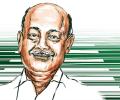
Radhakishan S Damani, investor and promoter of the D-Mart supermarket chain, has broken into the elite club of the top 100 global billionaires. Damani, who grew up in a single-room apartment in Mumbai, is now ranked 98th on the Bloomberg Billionaires Index with $19.2 billion as his net worth. The index is a daily ranking of the world's richest people. The other Indians on the top 100 rich list ahead of Damani are Mukesh Ambani, Gautam Adani, Azim Premji, Shiv Nadar, and Lakshmi Mittal.

After a sharp outperformance in the mid-and small-cap segments in the first half of calendar year 2023 (H1-CY23), analysts are now turning cautious on these two market segments and suggest investors stay selective and look for valuation comfort and earnings visibility before investing. The S&P BSE Midcap index has surged 13.7 per cent in H1-CY23, and the S&P BSE Small-cap index gained 12.7 per cent during this period, data shows. The S&P BSE Sensex, in comparison, has moved up 6.4 per cent.

'It's important that every portfolio is well diversified.' 'My own portfolio is diversified across asset classes: 50% is in equity funds, 15% in international schemes, 25% in debt funds and 10% in sovereign gold bonds.'
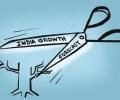
Fitch Ratings on Thursday slashed India's GDP growth projection for FY23 to 7 per cent, saying the economy is expected to slow against the backdrop of global economy, elevated inflation and high interest rate. In June, it had forecast 7.8 per cent growth for India. "We expect the economy to slow given the global economic backdrop, elevated inflation and tighter monetary policy. "We now expect the economy to grow 7 per cent in the financial year to end-March 2023 (FY23) from 7.8 per cent previously, with FY24 also slowing to 6.7 per cent from 7.4 per cent before," Fitch said in its September edition of the Global Economic Outlook.

The rally in silver may continue if the global economic recovery remains on course.

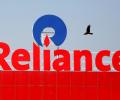
Reliance Industries on Friday reported a 41.5 per cent jump in its third quarter net profit as oil, retail and telecom businesses fired on all cylinders. Net profit of Rs 18,549 crore in October-December compared with Rs 13,101 crore a year back, the company said in a stock exchange filing. Income from operations rose to Rs 1.91 lakh crore from Rs 1.28 lakh crore.
'In 2022, active management, long-short strategies, multi-asset strategies, and asset allocation strategies need to be considered to meet long-term investment goals.'

Adani Enterprises on Wednesday said it has decided to withdraw its fully subscribed Rs 20,000-crore follow-on public offer (FPO) and will return the proceeds to investors. The announcement came a day after the company's FPO was subscribed fully on the last day of the offer on Tuesday. "The Board of Adani Enterprises Ltd., (AEL) decided not to go ahead with the fully subscribed FPO.

Embattled billionaire Gautam Adani on Thursday spoke publicly for the first time since his ports-to-energy conglomerate publicly battled a short seller's accusation of stock manipulation and accounting fraud, saying the abrupt move to withdraw a fully-subscribed share sale at his flagship firm was due to market volatility. His group continued to lose on the stock market, with the cumulative rout now nearing $108 billion in a week -- one of the biggest wipeouts in India's history. "After a fully subscribed follow-on public offering (of Adani Enterprises Ltd), yesterday's decision of its withdrawal would have surprised many.

Richest Indian Mukesh Ambani on Tuesday mentioned about leadership transition at his energy-to-retail conglomerate, saying he wants the process to be accelerated with seniors, including him, yielding to the younger generation. Ambani, 64, who has previously not spoken about succession plans at the country's most valuable company, said Reliance is "now in the process of effecting a momentous leadership transition." Ambani has three children -- twins Akash and Isha, and Anant.

'Periods of high volatility are usually bad for mid-caps and this is something that has to be kept in mind.' 'Focus on quality is of paramount importance.'

Laxman Narasimhan, a veteran in leading and advising global consumer-facing brands, has been named as the new CEO of coffee giant Starbucks, joining a growing cohort of Indian-origin business leaders at the helm of global corporations.
Aramco also plans to invest in building India's largest oil refinery on the country's west coast.

'We all face challenges in life. It's our approach towards them that absolutely decides what you become.'

Amazon's rivalry in India with oil-to-retail conglomerate Reliance Industries looks set to head to the cricket field, where they will likely battle media heavyweights for telecast rights to the Indian Premier League (IPL) with its hundreds of millions of viewers.

Godrej and Big Bazaar have stood out in the consumer goods and service spaces by acing the challenge of aligning innovation with outcome.

The likelihood is that India will maintain a moderately upbeat economic tempo -- well short of tearaway growth, explains T N Ninan.

The country's largest insurer LIC on Tuesday listed its shares at a discount of 8.11 per cent at Rs 872 per share on the NSE. On the BSE, the shares got listed at Rs 867.20 apiece, down 8.62 per cent over the issue price of Rs 949 a share. LIC had fixed the issue price of its shares at Rs 949 apiece after a successful initial public offering, which fetched Rs 20,557 crore to the government.

Recovery seen in Q4, companies continue to focus on enhancing cash flow
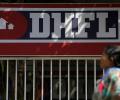
Piramal Enterprises (PEL) on Wednesday said it has completed the acquisition of Dewan Housing Finance (DHFL) by paying Rs 34,250 crore to creditors of the housing finance company. The company said the creditors of DHFL, including fixed deposit (FD) holders, would recover an aggregate amount of Rs 38,000 crore from the resolution process of DHFL. The amount comprises approximately Rs 34,250 crore to be paid by Piramal Capital and Housing Finance Ltd (PCHFL) as a combination of cash and NCDs, and an amount of approximately Rs 3,800 crore which is the entitlement of creditors as per the resolution plan from the cash balance available with DHFL, the company said.

'The competition between the two is definitely going to be of great interest to the Indian market.'
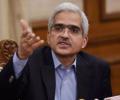
With NEFT, which drives the retail payments value, operationalised on a 24x7x365 basis, the country's payment systems landscape is headed for substantial growth.

You will need a sharper eye for stock picking and a greater appetite for risk than most retail investors possess, recommends T N Ninan.
